Mount Taranaki, Taranaki
Oaonui Production Station, South Taranaki Coast
Taranaki Refining Company is developing New Zealand's first domestic refining capability since the closure of Marsden Point in 2022. We are sourcing skid-mounted refinery technology to process Taranaki's condensate and crude oil into the fuels New Zealand needs.
Since Marsden Point's conversion to an import-only terminal in 2022, New Zealand imports every litre of petrol, diesel, and jet fuel it consumes. Taranaki has the feedstock, infrastructure, and expertise to change that.
Taranaki produces approximately 15,000 barrels of condensate and 7,000 barrels of crude oil per day from active fields. This feedstock is currently exported to East coast Australia or Asia — our refinery uses both, with optimal diesel yield from a blend of 70% condensate and 30% McKee crude.
New Zealand holds only 45 days of domestic fuel storage — well below the IEA-recommended 90 days. The shortfall is covered by offshore "ticket" contracts that are commercially and geopolitically exposed. Domestic refining closes the loop.
A domestic refinery captures the refining margin onshore, creates skilled permanent jobs in Taranaki, and reduces New Zealand's exposure to international freight, pricing volatility, and supply disruption.
We are sourcing proven skid-mounted refinery equipment designed to process a blend of Taranaki condensate and crude oil — delivering fuel-grade products without the complexity or cost of a traditional greenfield refinery.
Targeting a blend of condensate and crude oil from Taranaki's producing fields. The blended feed optimises yield across the full product slate and provides feedstock flexibility as field profiles evolve.
Sourcing modular, skid-mounted distillation and processing equipment from specialist international suppliers. Factory-built, truck-transportable, and proven in similar applications globally — delivering faster deployment and lower capital cost.
Assessing industrial sites across Taranaki with existing infrastructure, consenting pathways, pipeline access, and proximity to producing fields.
Assembling a team of energy sector specialists across refinery engineering, operations, iwi partnerships, and capital to deliver a world-class facility for Taranaki.
From blended condensate & crude feedstock
| Diesel | 55% |
| Jet Fuel / Kerosene | 9% |
| Petrol (91 RON) | 6% |
| Heavy Naphtha | 22% |
| LPG | 8% |
Initial capacity: 1,000 bpd. Phase 2 targets 2,000 bpd.
Taranaki is home to New Zealand's petroleum industry, with multiple active fields producing condensate and crude oil. Our refinery is designed to accept feedstock from across the basin, blending condensate and crude to optimise product yield.
~4,500 bpd — largest condensate producer; offshore south Taranaki
~2,400 bpd — combined onshore production
~2,100 bpd — McKee crude blends with Mangahewa condensate; north Taranaki
~1,400 bpd — 65-year producing history
~1,200 bpd — major offshore field; condensate production
~1,100 bpd — offshore, north coast
~1,000 bpd — reliable long-tail producer
~800 bpd — rich condensate-gas ratio
~500 bpd — onshore condensate and crude
~400 bpd — onshore; third-party processing via Waihapa station
Existing pipeline infrastructure connects major fields across the basin, with Port Taranaki providing deep-water access for distribution.
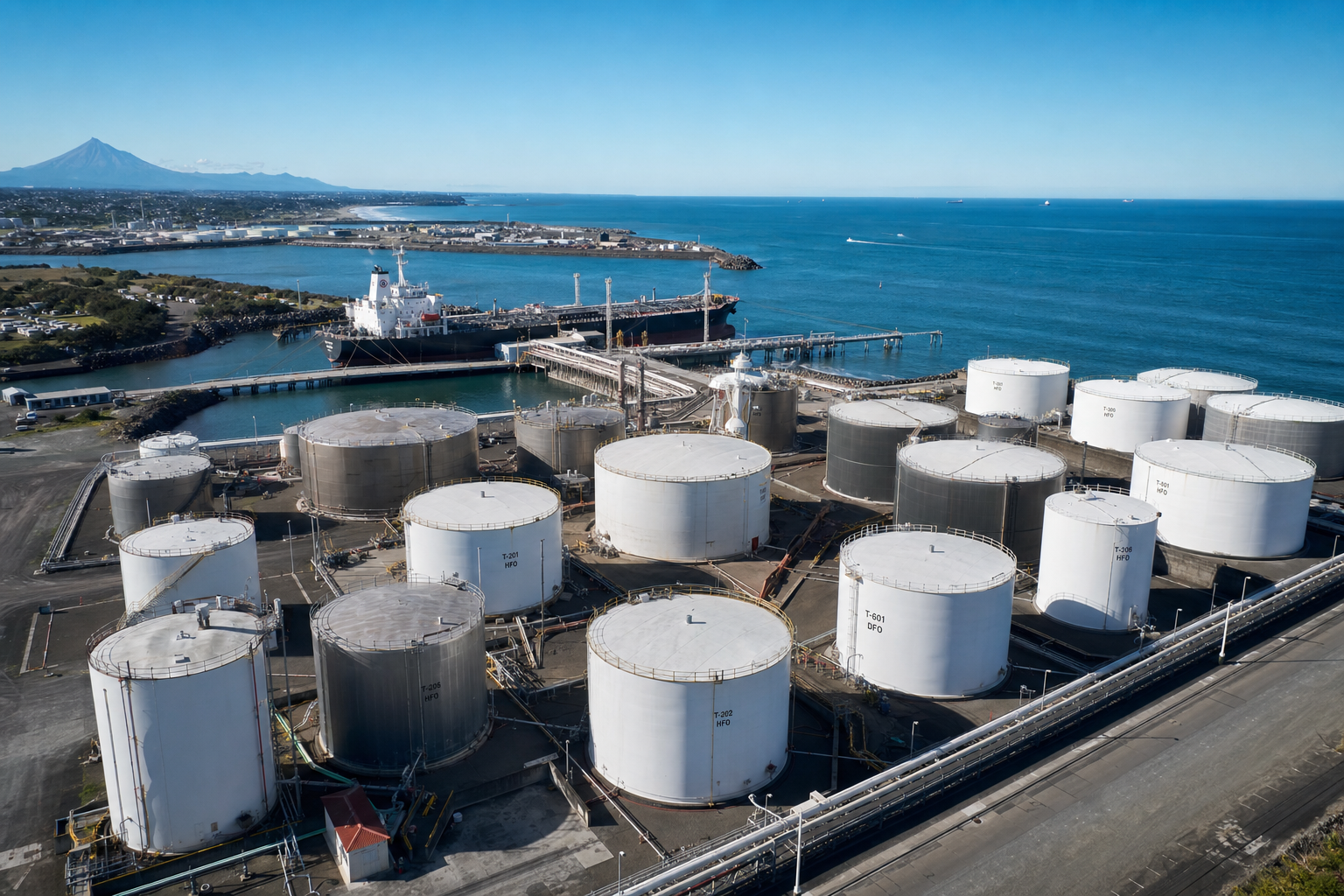
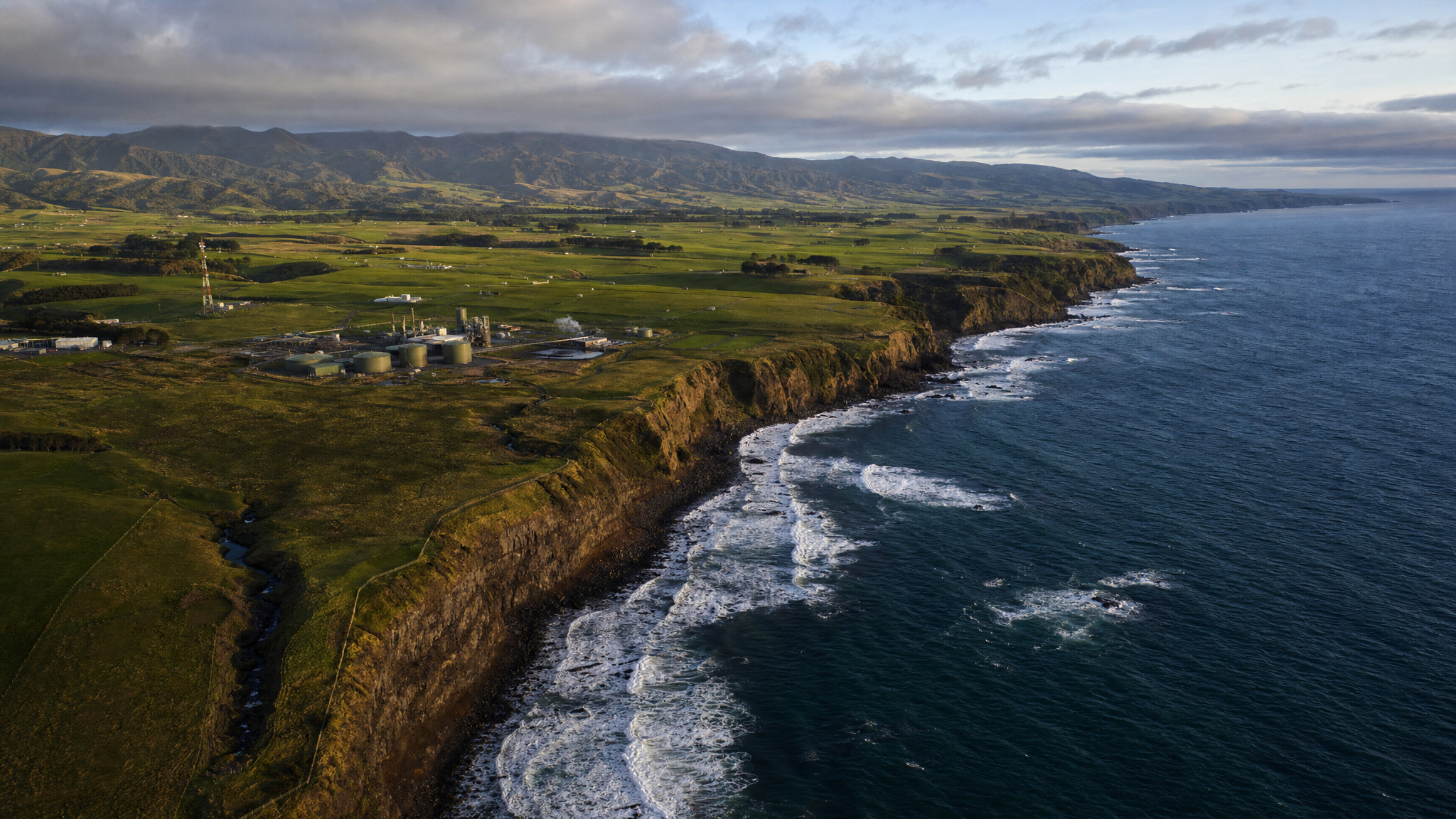
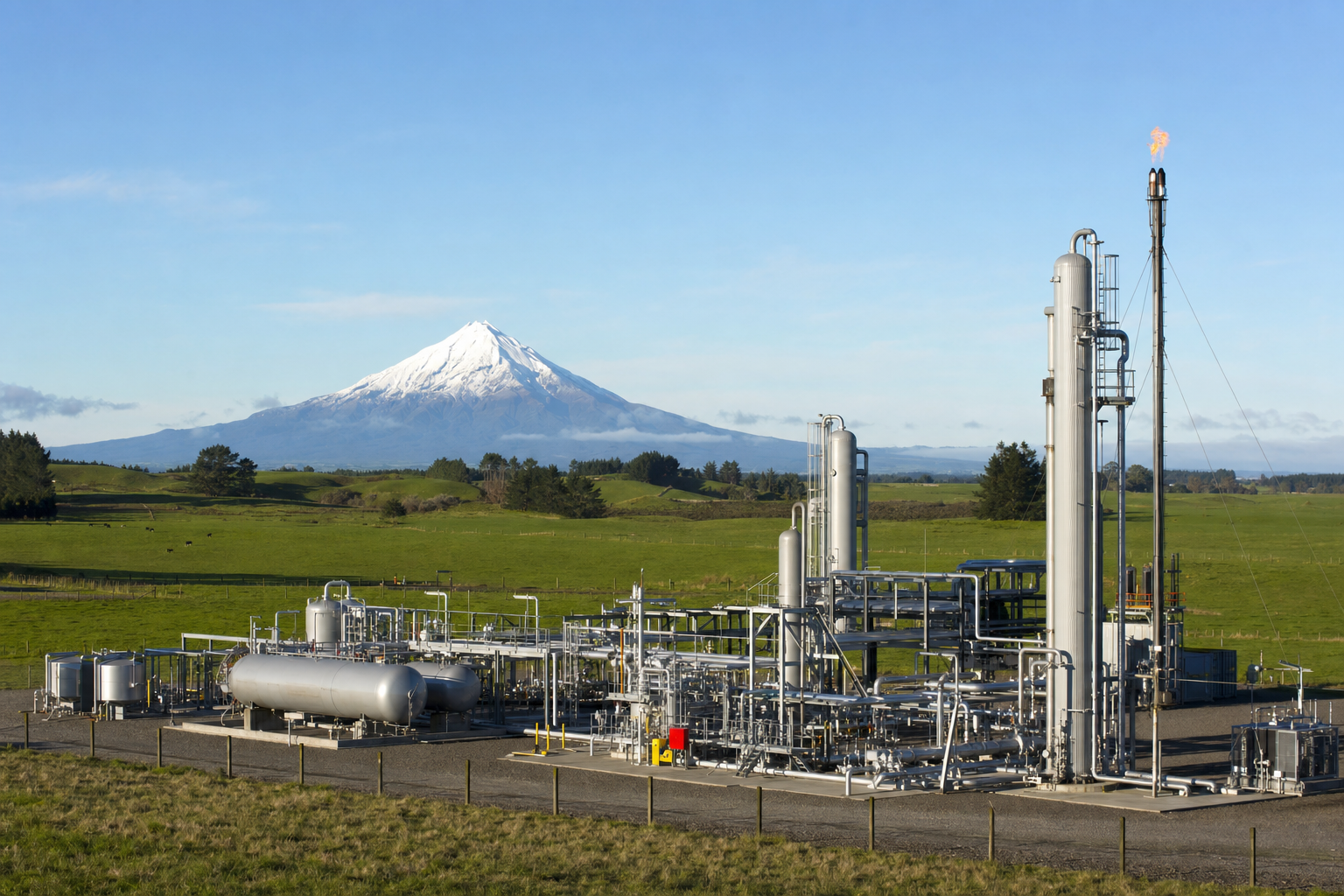
Taranaki has an extensive network of production stations, processing plants, storage facilities, and pipelines — built over decades of petroleum operations. These assets represent a foundation for domestic refining.
The New Zealand Government has identified domestic fuel security as a strategic priority. Policy settings and funding mechanisms are actively supporting the development of onshore refining and storage capability.
MBIE's Fuel Security Plan (November 2025) identifies domestic alternatives as a key focus area, including Special Economic Zones for fuel security infrastructure and financial support pathways for qualifying projects.
The MSO regime (in force January 2025) requires fuel importers to hold minimum domestic stock levels — creating standing commercial demand for New Zealand-located storage capacity that a domestic refinery directly serves.
A $1.2 billion fund administered through Kanoa supports regional infrastructure projects with demonstrated economic impact. Domestic refining in Taranaki aligns directly with the fund's mandate for energy sector development and regional employment.
New Zealand holds only 45 days of domestic fuel supply against the IEA's 90-day target. Government policy actively supports closing this gap through domestic storage — a commercial revenue layer for any refinery with material tankage.
A $200 million fund supporting upstream gas development — extending the productive life of gas fields that also produce the condensate feedstock a domestic refinery requires. Adjacent support for feedstock security.
The National Fuel Plan, Petroleum Demand Restraint Act review, and MSO regime review (2029) all reinforce the strategic case for domestic refining. Policy direction is clear: New Zealand wants onshore fuel capability.
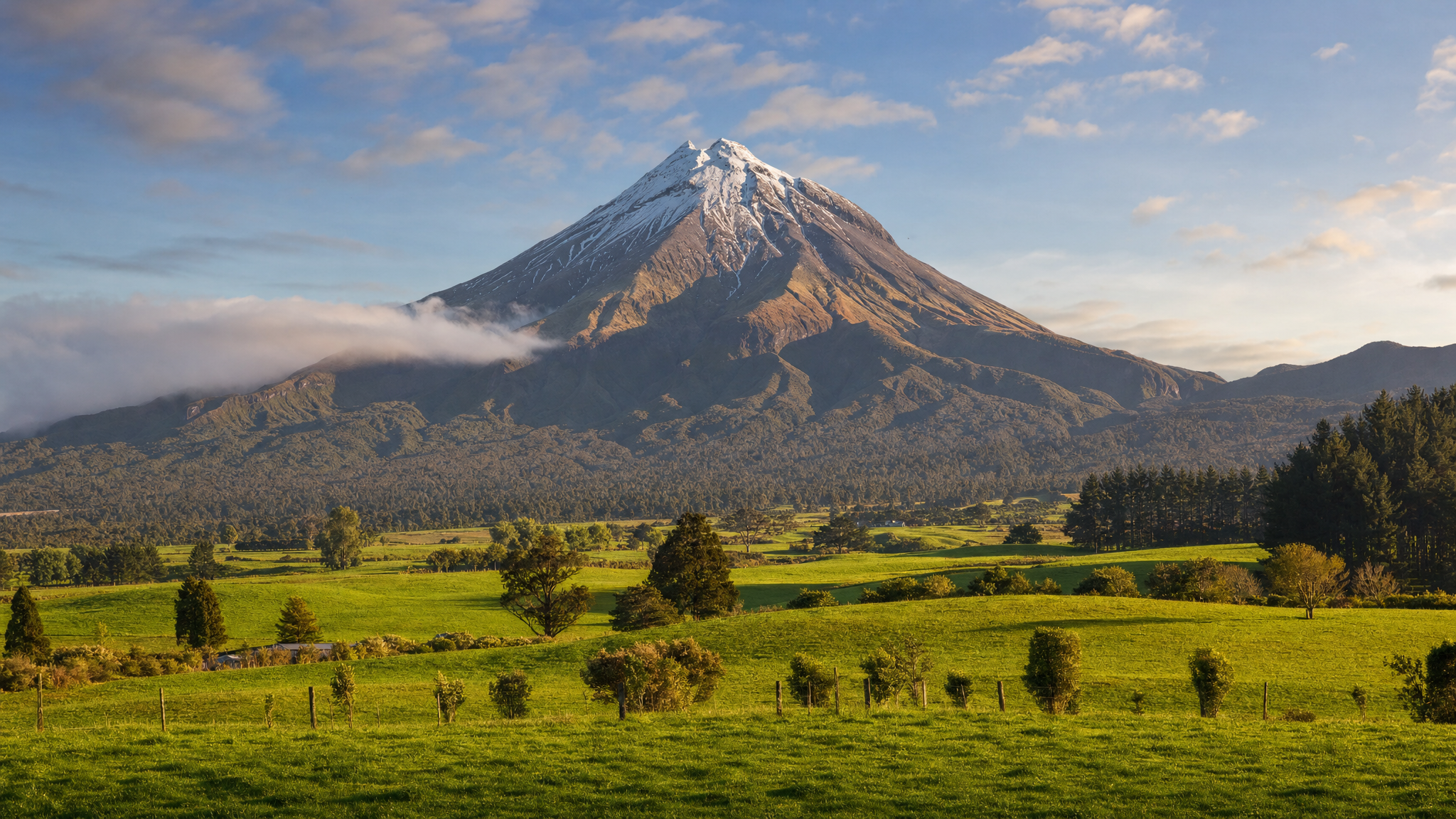
Taranaki is New Zealand's energy heartland — home to the country's petroleum industry, a deep pool of technical expertise, and the infrastructure to support a new chapter in domestic fuel production.
Gas processing plants, pipeline networks, storage facilities, and port access already in place across the region.
Generations of oil and gas expertise, with engineers, operators, and technicians who understand hydrocarbon processing.
Direct access to condensate and crude from producing fields, connected by existing pipeline infrastructure.
Port Taranaki provides deep-water capability for product distribution and potential export of surplus refined products.
As traditional oil and gas activity evolves, a domestic refinery sustains skilled employment and economic activity in the region.
Multiple sites with existing industrial zoning, use rights, and consenting pathways offer a streamlined development path.